
Small and mid-sized fleets have a tough balancing act. Owners want control, but they do not want a culture where drivers feel watched every minute. Operations teams want compliance, but they do not want paperwork that slows the day.
The good news is that “control” does not have to mean micromanagement.
The most efficient SMB fleets build simple operating rules that reduce uncertainty. They measure only what matters. They act on patterns, not on one-off events. And they communicate expectations clearly.
This blog explains how to create fleet control that feels fair to drivers and practical for managers.
1) Define control as “preventing surprise”
Micromanagement is constant checking. Control is preventing surprises.
A controlled fleet operation can answer:
- Where are vehicles right now?
- Which trips are at risk of delay?
- Which vehicles show early signs of misuse or maintenance issues?
- Which drivers need coaching this week?
If you cannot answer these quickly, you will compensate with calls, messages, and daily stress.
2) Use a small set of fair, visible rules
Drivers resist vague monitoring. They accept clear rules that protect safety and reduce blame.
Start with 4–6 rules that are measurable and explainable:
- Speed threshold and where it applies
- Harsh braking/acceleration threshold
- Maximum idling time at known locations
- Route deviation threshold (only when the route matters)
- Pre-trip checklist completion (simple, fast)
The goal is consistency, not perfection.
3) Shift from “alerts” to “weekly patterns”
SMB teams often turn on every alert, then stop paying attention.
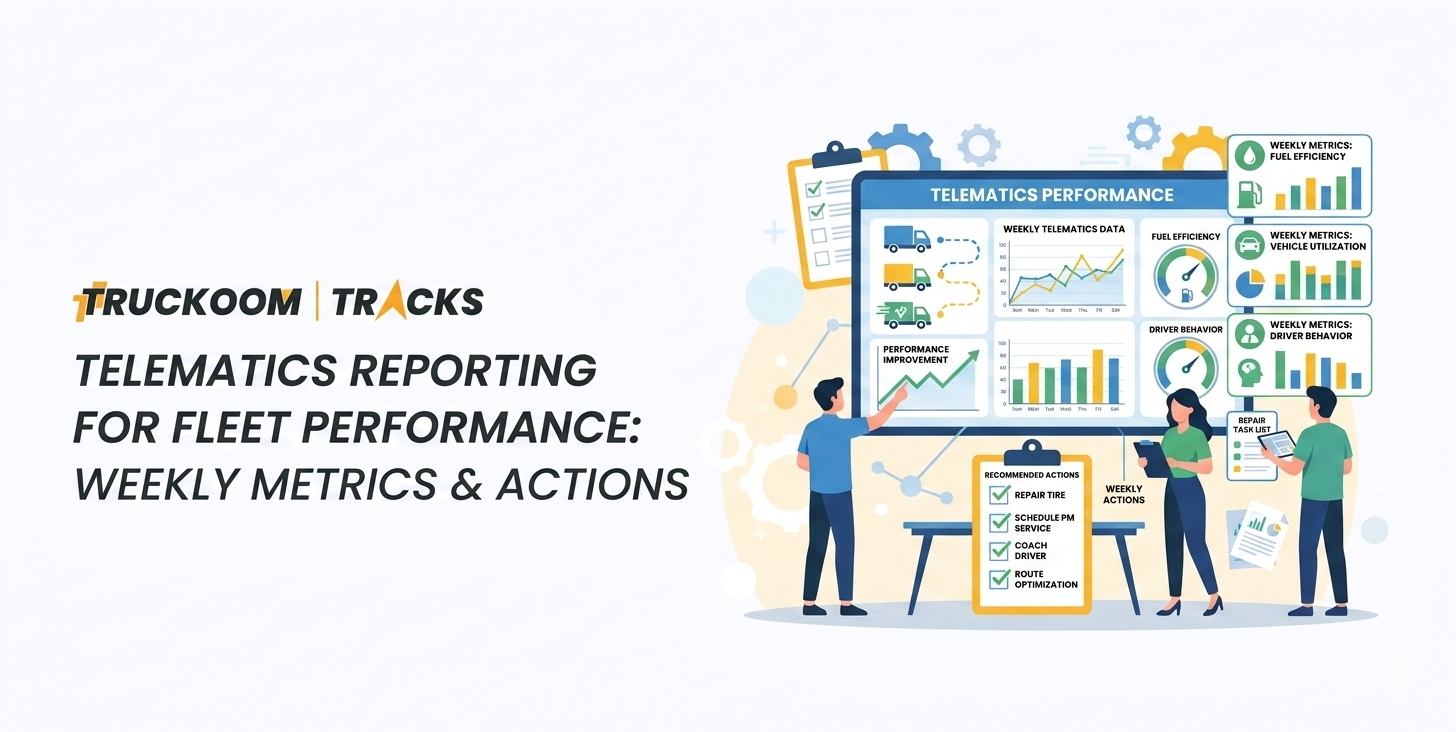
Instead, review behavior in a weekly rhythm:
- Identify top 3 recurring exceptions
- Identify top 3 vehicles/drivers by pattern, not by single event
- Pick one change to apply this week (coaching, route adjustment, maintenance check)
This reduces conflict because the conversation is about trends, not about “you did this once.”
4) Coach one behavior at a time
Good coaching is specific and limited:
- “This week, reduce idling at Site A. Target: under 8 minutes.”
Not:
- “Improve your driving.”
Link it to outcomes:
- Less fuel waste
- Fewer complaints
- Safer operations
- Less emergency maintenance
5) Make compliance a by-product of good operations
Compliance is easier when your fleet has structure:
- Clear records of trips and vehicle activity
- Maintenance logs tied to vehicle usage
- Driver behavior captured as patterns
- Exceptions documented with time and location
Instead of building compliance “later,” build it into the routine.
How Truckoom helps SMB fleets
Truckoom helps SMB fleets keep control without unnecessary complexity: real-time tracking, practical exception monitoring, and reporting that supports coaching and compliance.
If you are running a fleet and want to reduce calls, reduce surprises, and improve control without micromanaging, Truckoom can help.
Need a quick assessment? List your top 2 operational headaches (late ETAs, fuel variance, driver behavior, maintenance surprises, reporting time). We’ll reply with the simplest control rhythm to start with.